Bees for Development Charity

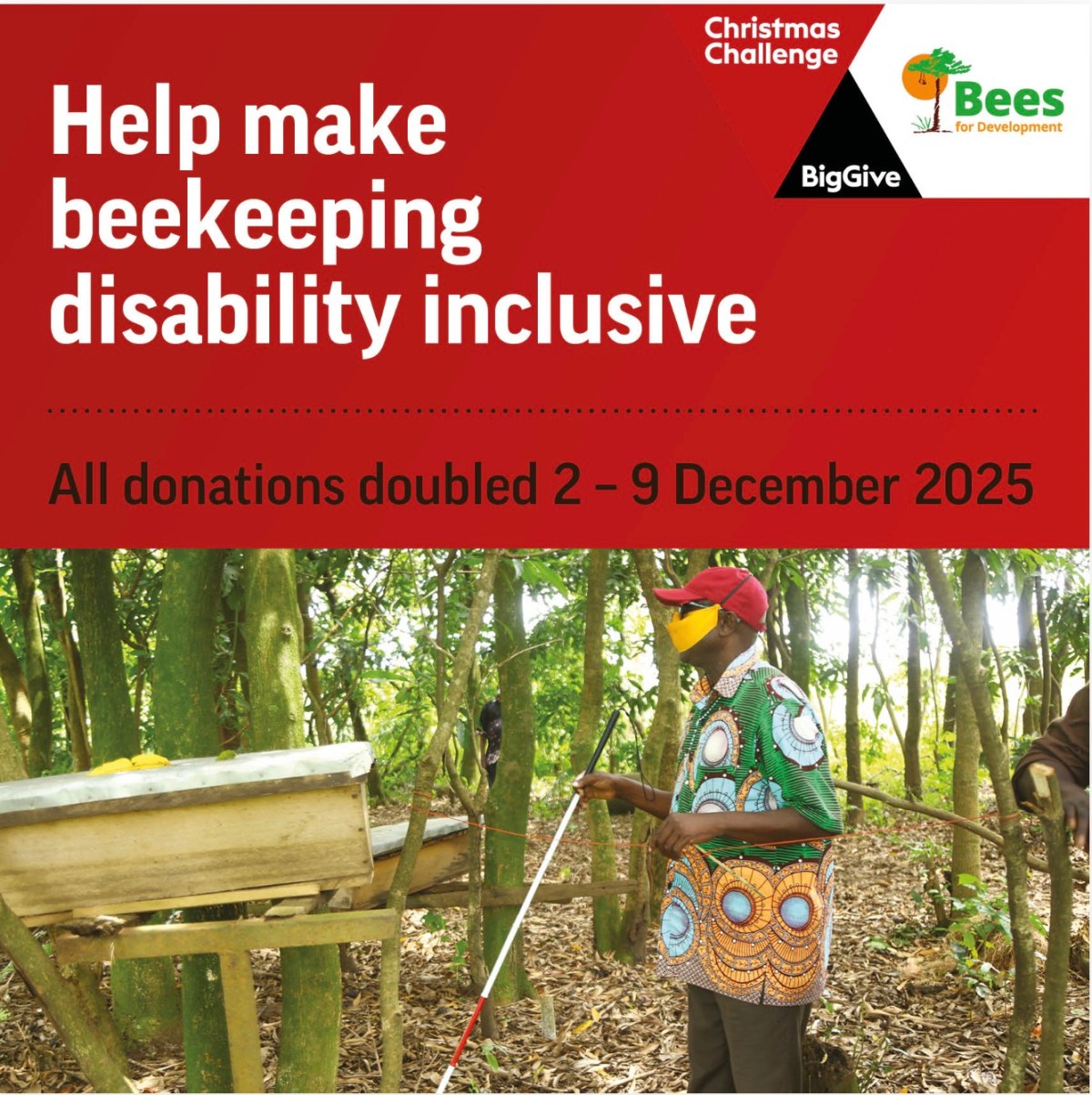
The Bees for Development Big Give Christmas campaign runs from Tuesday 2 December – Tuesday 9 December 2025. During this week only, your money is worth double the value of what you donate: £5 becomes £10, £50 becomes £100, £5,000 becomes £10,000! This week is your chance to make DOUBLE the difference by giving 300 people with disabilities in Uganda and Ghana the tools, skills, and confidence to transform their lives through beekeeping. Please help us to make life better with bees and donate at Help Make Beekeeping Disability Inclusive – Big Give

We are fundraising to provide beekeeping training to people living with disability in Uganda and Ghana, empowering them to make a living and earn respect. Make a donation between 2–9 December 2025 and all donations will be doubled!

12% of Ugandans and 8% of Ghanaians have a disability. Employment opportunities are few and difficult to access and people with disability often face huge social, cultural and physical barriers and suffer chronic poverty.

Beekeeping provides a way for people to earn an income. It also provides good nutrition and medicine, helps address social inclusion and encourages people to protect their environment.

🐝 Develop disability inclusive training for 300 beekeepers including men, women and youth from Uganda and Ghana
🌟 Train bee champions to provide beekeeping mentorship
🌍 Scale up and share our successful Ugandan disability inclusive beekeeping model with Ghana.

Please do save the date – you can be confident that your money will reach the people who need it most, read more details HERE 

Insta: @‌beesfordevelopment
Facebook: @‌beesfordevelopment
X: 
@‌BeesForDev
LinkedIn: @‌bees-for-development

Members: Swarm Collection Guidelines

If you are called on to help with collection of a swarm please consider:

  1. Do I have the training and capability to do this?
    Normally those with a basic assessment or higher qualification who have kept bees for more than 5 years are automatically qualified.
  2. Do I have the equipment needed for this situation?
    Steps, Ladders, Bee suit etc, Bee equipment (skep/nuc/hive/box/sheeting/rope or tape etc.), secateurs, loppers, means to securely transport the bees.
  3. Do I need assistance to undertake this safely?
    Will I need an assistant, can the homeowner/occupier help safely?
  4. Are the conditions appropriate (weather/ground/surrounding risks/access restrictions/people present?)
  5. What is the ultimate destination for the bees?
    Where will their new home be? Can I transport them safely?
  6. What are the benefits of this action?
    Just the bee colony gained, or can the association receive a donation in recognition of a service performed? [The owner/occupier may be relieved to see the back of the bees and the time/energy/materials involved in their removal may be significant.]
  7. Am I insured?
    The current Insurance Policy FAQs for NBKA/BBKA members state:
    [9.] I am called by a member of the public to collect bees that have swarmed – am I covered?
    What happens if I charge for my services?

    You are covered provided, it is part of your normal beekeeping activities. If you charge reasonable expenses to cover fuel costs then this will not affect your cover. However, if you make a business out of swarm collection this would be viewed differently. You would need normal Commercial Insurance for this business activity which is not covered by the BBKA policy.
    [10.] Is there any restriction on working at height?
    No. The Aviva policy does not have a specified restriction for working at height. Broadly speaking, you should not attempt any work for which you do not have adequate equipment, training or experience.  The policy does not cover reckless acts, so if you are in doubt seek guidance from someone with the relevant experience or training or, preferably, use an alternate method that would avoid you having to climb to height.

Beginners Beekeeping Course 2028

Our 2027 course is now fully booked and we are no longer accepting applicants. We will be running another one in 2028, we will open the page for bookings in July 2027 so keep an eye out.

We will be running a course for those interested in beekeeping. This will be of interest to the spectrum of people from those with hives who have not had training, through those keen to start keeping their own bees, to those who are not sure if beekeeping would be for them.

The course will run on Monday evenings in Newent starting on the 22nd of February 2027. To read more please see our training page here.

Help! I have a swarm of bees!

Please remember swarm collection is a free service offered on an entirely voluntary basis. It is at the complete discretion of individual beekeepers that swarm collections are attempted and only if the beekeepers feels they can do so safely.

The full details listed at the bottom of the page will be needed to assess your specific situation.  Each swarm will be considered on a case by case basis as to whether it can be safely dealt with by one person alone.  Swarms in chimneys and roofs may need special equipment.  If swarms are in high (more than 3m) or difficult to access positions, members may not be prepared to attempt recovery of the swarm.  They are fully authorised to refuse to undertake work where additional training or insurance policies would be needed.

For comprehensive information on swarms please look at the website provided by the British Beekeepers Association by clicking here.

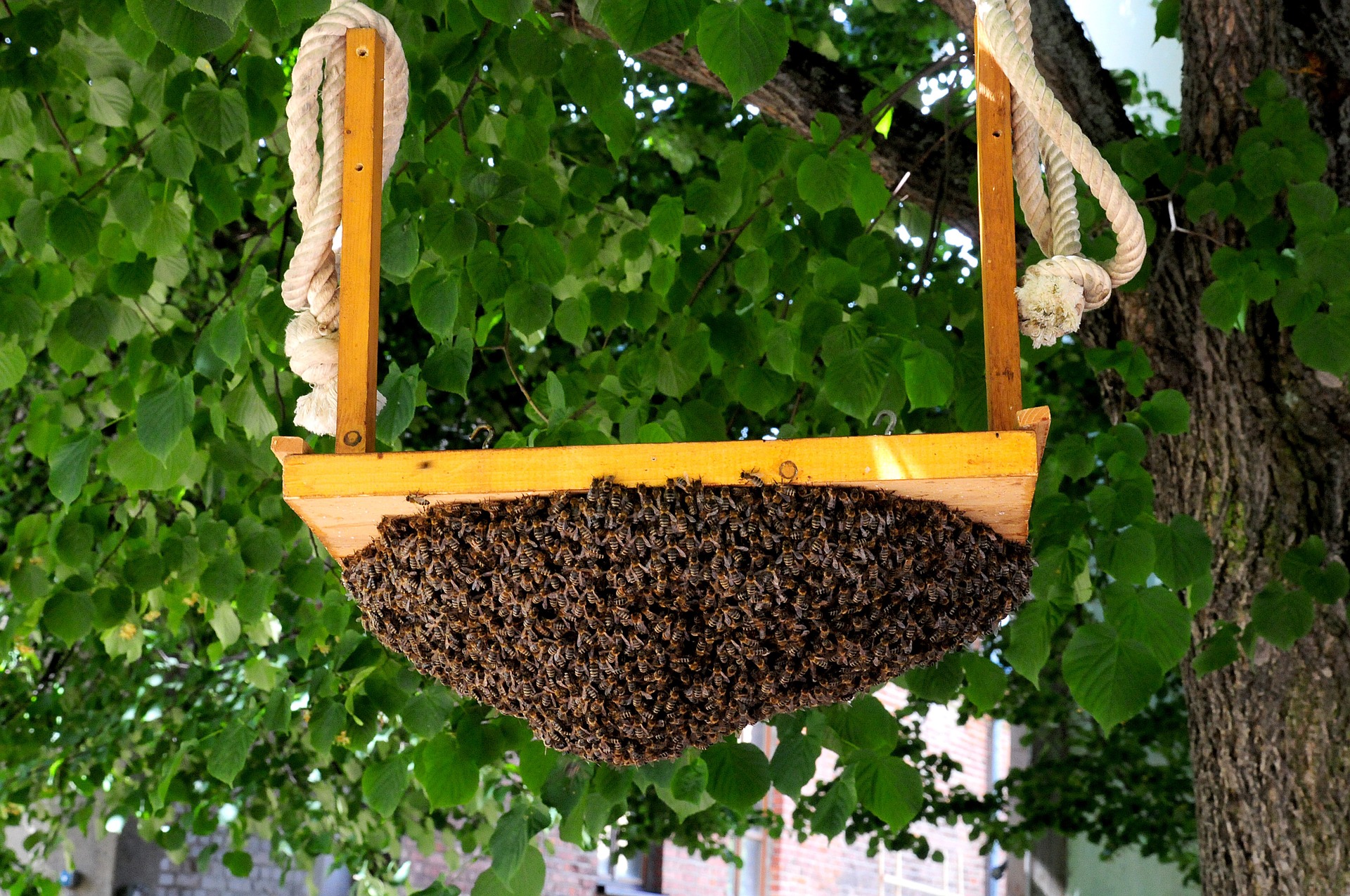
hive-1517674_1920
Swarm on a garden swing

If only they were all this easy to get to!

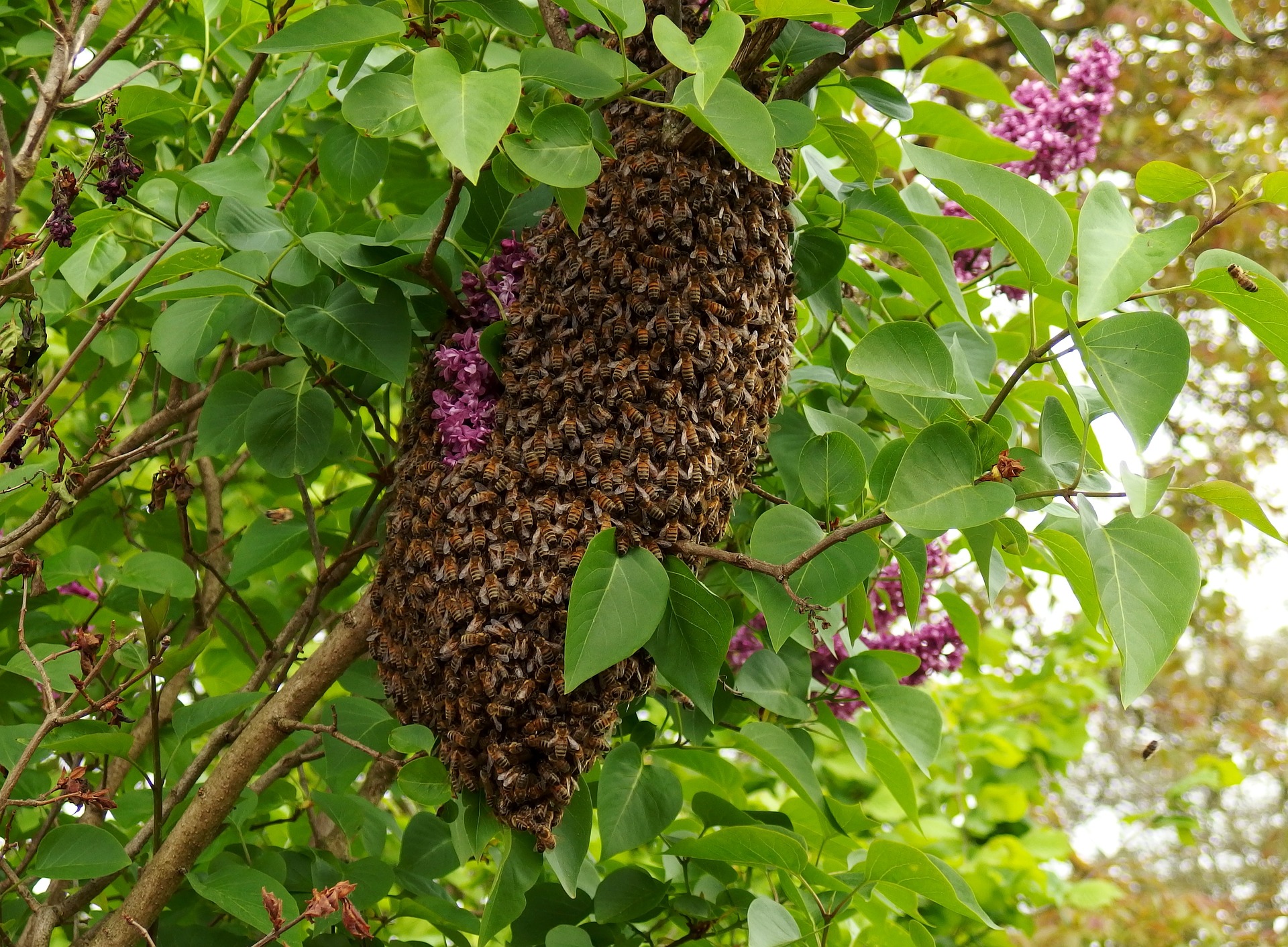
swarm-1548381_1920
Swarm in a shrub

If you are not sure that it is a swarm then please read the information found on the BBKA link.  This may save you and our volunteers time and trouble.

If you are confident that you have a swarm of honeybees then please use the BBKA map through the links below.  The list is updated prior to swarming season which generally starts after mid-April depending on the weather and temperatures.

If you have detected (or think you have) a swarm of bees the best way to find local help is to put your post code into the British Beekeepers Association website page here.  Newent Beekeepers have a current list of experienced people accessible through that link which should bring an effective response from someone fairly close to you.

One of our volunteers will try to help you.  Please be aware that many beekeepers are in full time work, it is a matter of luck if somebody is available, so you may have to call several to get a response.  They may also wish to bring along another beekeeper to assist, or someone in training who is learning about swarm collection.

Please try and have the following information to hand when you call, it will make the situation much easier to assess.


Item

Example Answer
Your swarm information – please give as much description as possible
Locatione.g. in a tree, on a fence, on side of house etc.
Distance above groundFeet or Metres
SizeTennis Ball, Football, Large Cushion.
Time of arrival(Please estimate the hours swarm has been present.)
Your NameOr the person who will be present when the swarm is dealt with.
Your AddressPlease include Postcode.
A contact TelephoneWe may need help to find you or assess equipment needed.

If you are not in the immediate Newent area, the same link will help you find details of beekeepers in your area who should be able to help with your problem.  Other Gloucestershire area beekeepers associations should provide lists of contacts updated on a yearly basis.  There are beekeepers all over the UK who can be found (relatively) close to you the same way.