Please remember swarm collection is a free service offered on an entirely voluntary basis. It is at the complete discretion of individual beekeepers that swarm collections are attempted and only if the beekeepers feels they can do so safely.
The full details listed at the bottom of the page will be needed to assess your specific situation. Each swarm will be considered on a case by case basis as to whether it can be safely dealt with by one person alone. Swarms in chimneys and roofs may need special equipment. If swarms are in high (more than 3m) or difficult to access positions, members may not be prepared to attempt recovery of the swarm. They are fully authorised to refuse to undertake work where additional training or insurance policies would be needed.
For comprehensive information on swarms please look at the website provided by the British Beekeepers Association by clicking here.
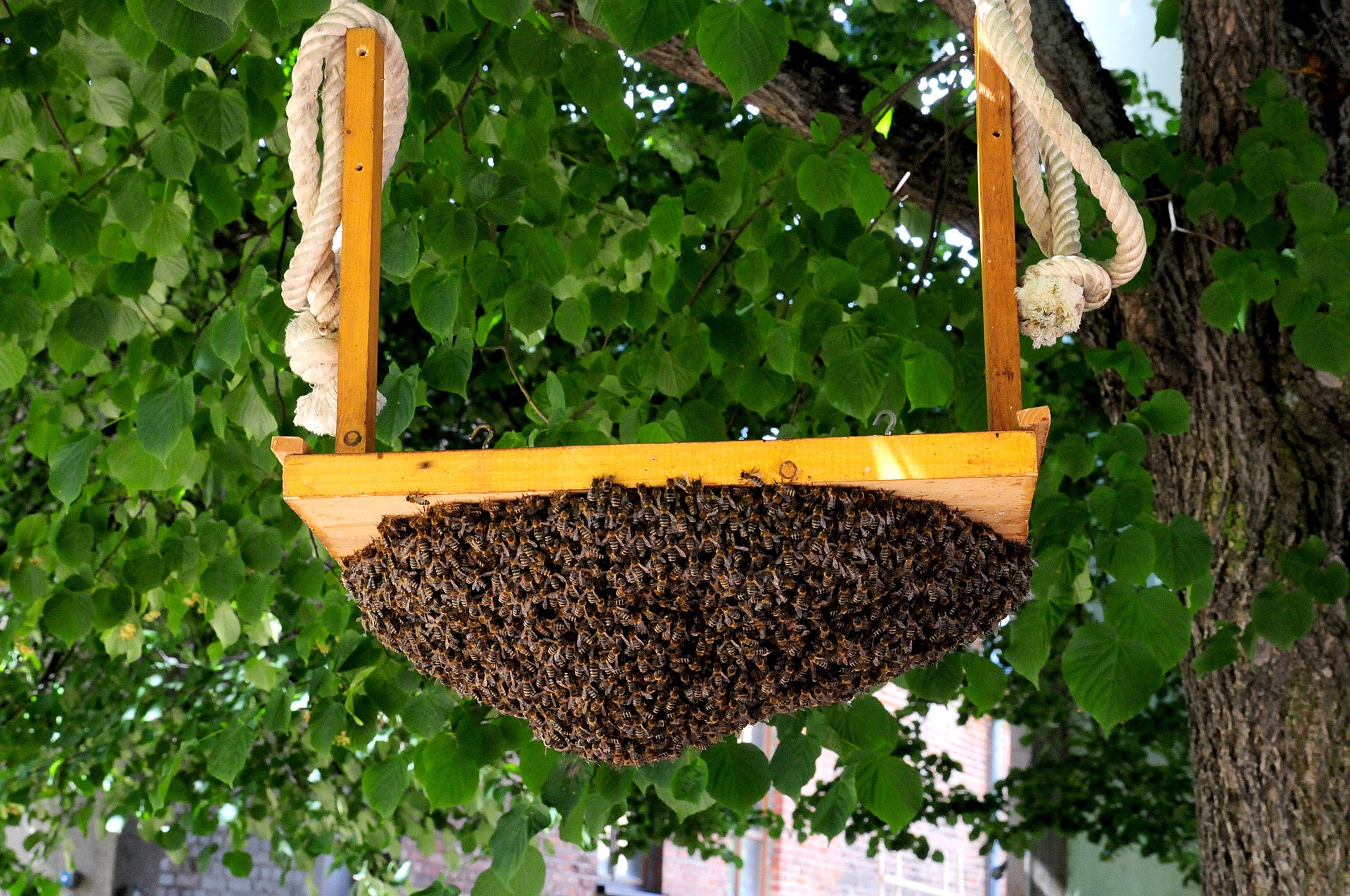
If only they were all this easy to get to!
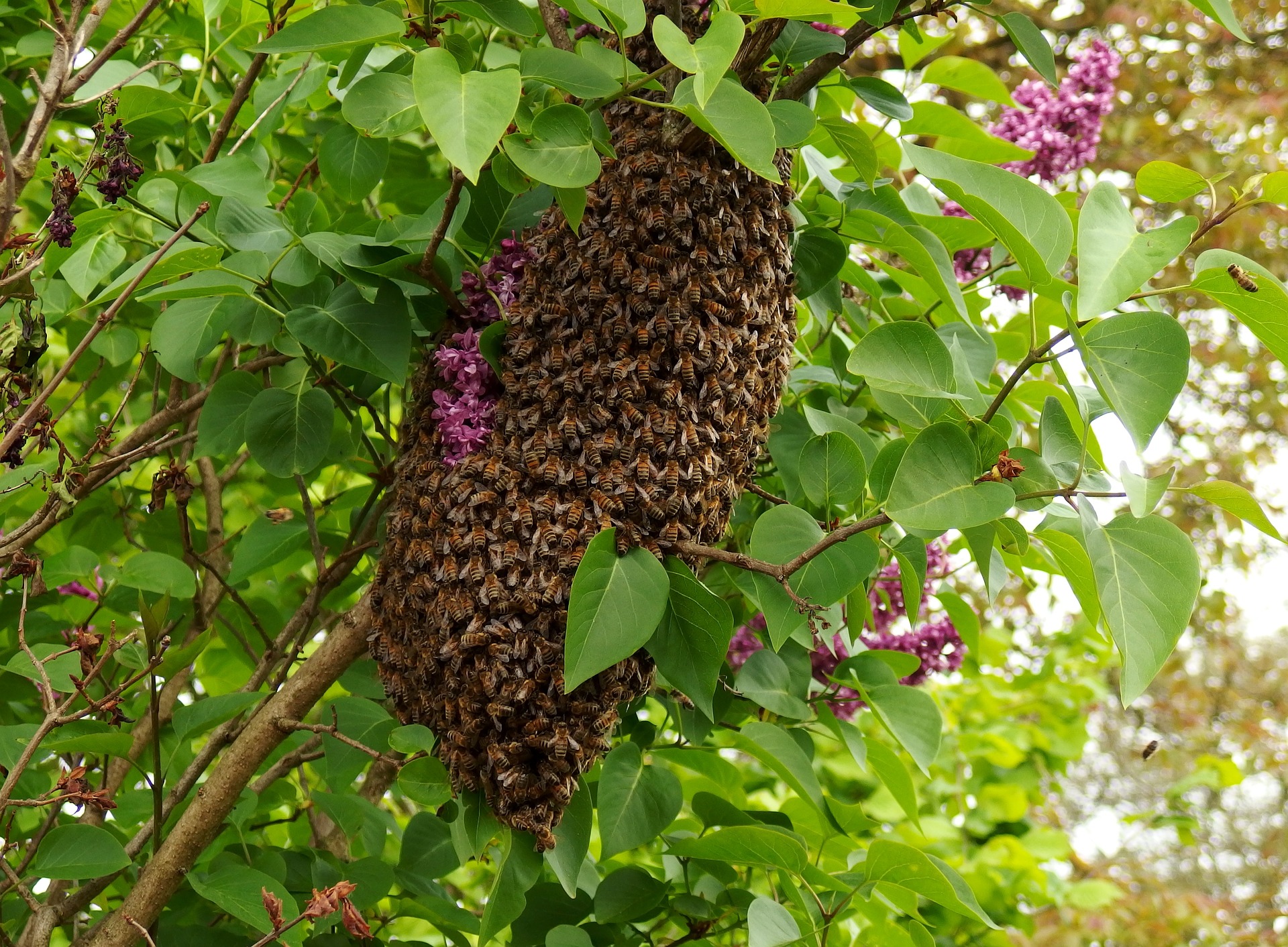
If you are not sure that it is a swarm then please read the information found on the BBKA link. This may save you and our volunteers time and trouble.
If you are confident that you have a swarm of honeybees then please use the BBKA map through the links below. The list is updated prior to swarming season which generally starts after mid-April depending on the weather and temperatures.
If you have detected (or think you have) a swarm of bees the best way to find local help is to put your post code into the British Beekeepers Association website page here. Newent Beekeepers have a current list of experienced people accessible through that link which should bring an effective response from someone fairly close to you.
One of our volunteers will try to help you. Please be aware that many beekeepers are in full time work, it is a matter of luck if somebody is available, so you may have to call several to get a response. They may also wish to bring along another beekeeper to assist, or someone in training who is learning about swarm collection.
Please try and have the following information to hand when you call, it will make the situation much easier to assess.
Item | Example Answer | Your swarm information – please give as much description as possible |
| Location | e.g. in a tree, on a fence, on side of house etc. | |
| Distance above ground | Feet or Metres | |
| Size | Tennis Ball, Football, Large Cushion. | |
| Time of arrival | (Please estimate the hours swarm has been present.) | |
| Your Name | Or the person who will be present when the swarm is dealt with. | |
| Your Address | Please include Postcode. | |
| A contact Telephone | We may need help to find you or assess equipment needed. |
If you are not in the immediate Newent area, the same link will help you find details of beekeepers in your area who should be able to help with your problem. Other Gloucestershire area beekeepers associations should provide lists of contacts updated on a yearly basis. There are beekeepers all over the UK who can be found (relatively) close to you the same way.
 Newent Branch of Gloucestershire Beekeepers
You must be logged in to post a comment.