News Updates

Featured

Talks for Winter 2025-26

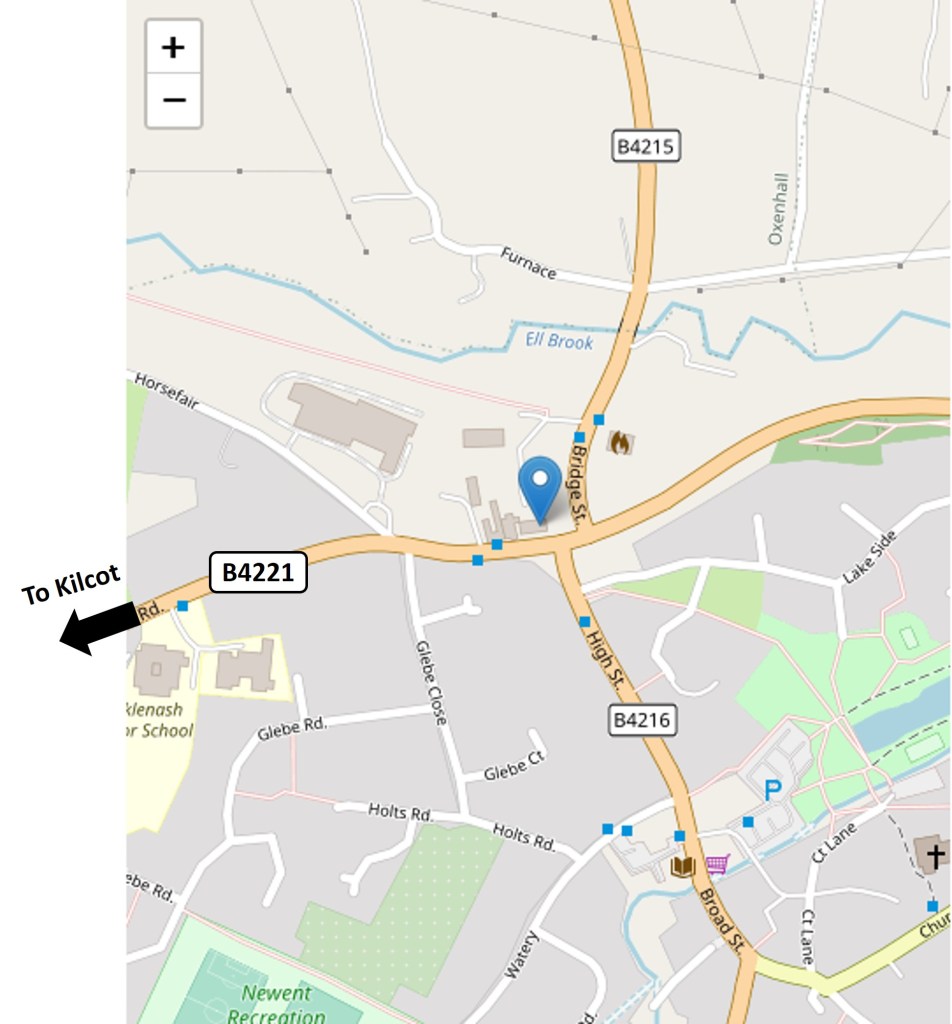
These are all held at Newent Community Centre, [Glebe Chapel], Ross Road
NEWENT GL18 1BD. ///delivers.snuggled.quietly

Our regular series of presentations on the last Thursday night of each month. The range of topics is varied, and we try to keep them relevant and entertaining for our members of all ages and experience levels. The meetings may be particularly useful to members taking on the Beginners’ Course both as information and an opportunity to meet our other members and discuss the presentation and general beekeeping issues.

Thursday November 27th 2025. The first of our Winter Talks – Richard Rickitt of Bee Craft will talk on “Trees and Bees”.

Thursday January 29th 2026. Our second talk – Richard Comont of Bumblebee Conservation Trust will talk on “Bumblebees v Honeybees”.

Thursday February 26th 2026. Our third talk – Steve Riley of Westerham Beekeepers will talk on “Varroa Resistance through Bee Improvement”.

Thursday March 26th 2026. Our fourth talk – Marin Anastasov of Gloucestershire Beekeepers will talk on“Aspects of Bee Diseases”.

The GBKA Spring lecture day, Honey Show and AMG

The Gloucestershire Beekeepers Association Spring lecture day, County Honey Show and the AGM will be held on Saturday 21st February 2026, hosted by Stroud Beekeepers Association


(Sponsored by Maisemore Apiaries (https://bees-online.co.uk/))

21st February 2026

Stonehouse Court Hotel, Bristol Road, Stonehouse, Gloucestershire, GL10 3RA

10.00 – 10.50 Arrival, Honey Show registrations and refreshments

10.50 – 11.00 Welcome by SBKA chairman and introduction to speakers:

11:00 – 12:00 Eyal Maori – The secret RNA language of the bees

12:00 – 13.00 Lunch break

13.00 – 13.30 GBKA AGM and Honey Show awards

13.30 – 14.30 Joe Ibertson – Treatment Free Beekeeping, Varroa Resistance and Free-Living Colonies

14:30 – 15:00 Tea and coffee

15:00 – 16:00 Richard Rickett – Bees and trees – an ancient partnership

16:00 Event close


Sponsored by Maisemore Apiaries.  Refreshments and lunch will be provided.

To help us plan adequate catering and capture any dietary needs, please complete the free event registration form here: https://buytickets.at/stroudbeekeepersassociation/1943884


Those of you who wish to enter the County Honey Show, please complete the attached form (honey show application form) and contact  nikkiburger@hotmail.co.uk by 20th Feb 2026

We look forward to seeing you there.


Lecture briefs

Eyal Maori – The secret RNA language of the bees

We recently discovered that honeybees do not only share food and duties within the hive; they also share molecular messages called RNA. RNA transmission between honeybees occurs through the ingestion of worker and royal jellies, which are secreted by nurse bees to nourish developing larvae.

Our research has shown that these transmissible RNAs are biologically active and can turn off specific genes in recipient bees. The discovery of this transmissible RNA pathway has raised many questions about why and how bees exchange RNA messages. Many of the RNAs we have detected originate from infectious agents such as viruses, bacteria and fungi. We hypothesise that bees share these RNAs between individuals and across generations to protect the colony from diseases it has previously encountered. In this way, the RNA communication pathway may serve a role similar to vaccination.

In this seminar, I will discuss how this ‘secret language’ works and explore how RNA sharing could contribute to colony health and resilience, offering a new perspective on the origins of communication and the remarkable cooperation among honey bees.

Joe Ibertson – Treatment Free Beekeeping, Varroa Resistance and Free-Living Colonies

In this talk Joe consolidates his observations as a treatment free beekeeper and conservationist.

Exploring how he has adapted his hives and management to suit his location and the bees, as a platform for ‘natural’ selection and Varroa resistance.

Richard Ricketts – Bees and trees – an ancient partnership

An ancient and close relationship with trees has greatly influenced the evolution and geographic distribution of honeybees. This talk reveals how trees enabled bees to colonise the British Isles and the ways in which people living here perhaps first interacted with and exploited honeybees, eventually becoming beekeepers. The talk looks at what trees provide for bees including cavities in which to nest and various essential resources, and how the relationship can work both ways. It concludes with a look at some of the most useful UK species of trees for honeybees including those that are worth planting in the garden.
Bees for Development Charity

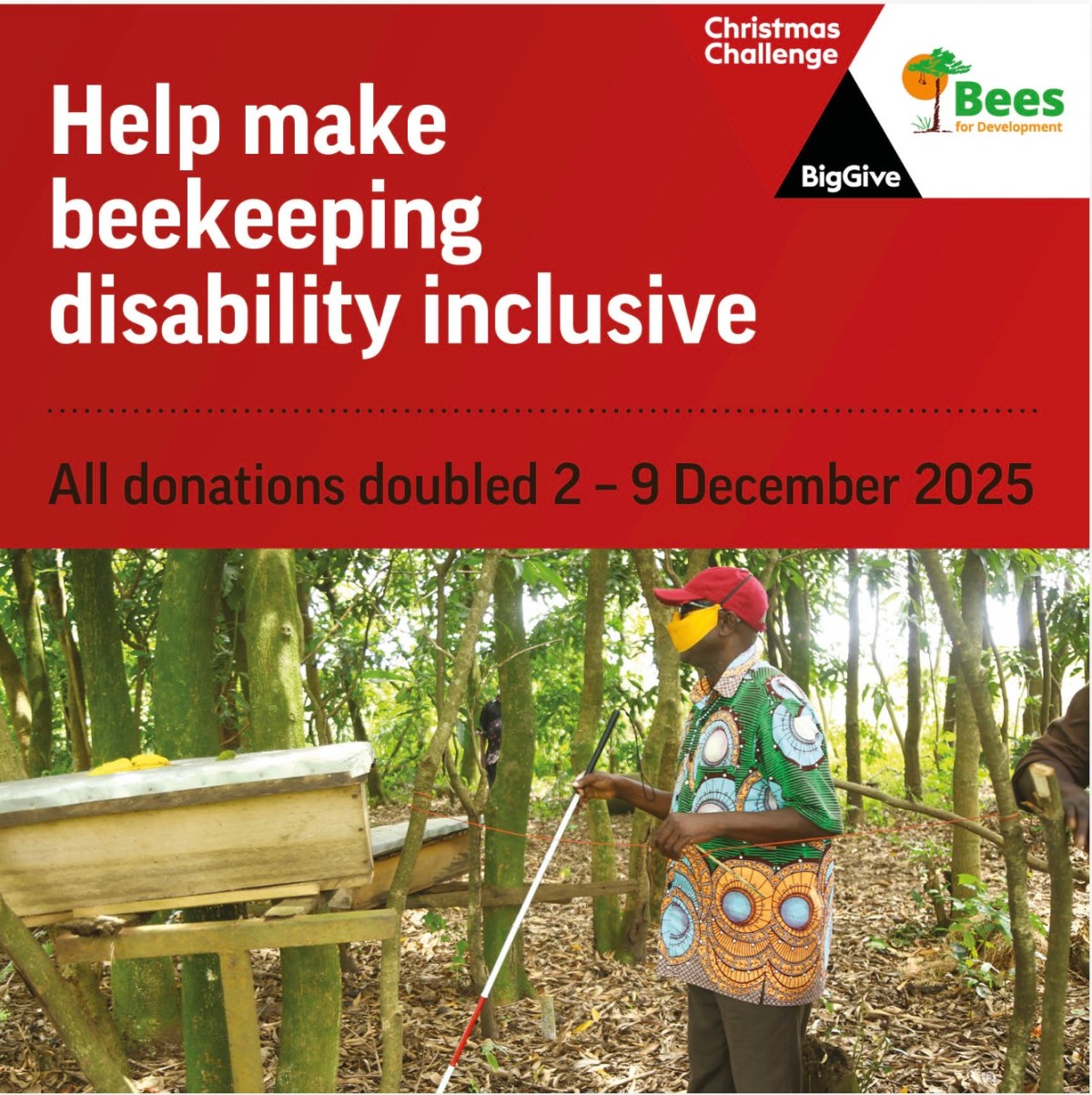
The Bees for Development Big Give Christmas campaign runs from Tuesday 2 December – Tuesday 9 December 2025. During this week only, your money is worth double the value of what you donate: £5 becomes £10, £50 becomes £100, £5,000 becomes £10,000! This week is your chance to make DOUBLE the difference by giving 300 people with disabilities in Uganda and Ghana the tools, skills, and confidence to transform their lives through beekeeping. Please help us to make life better with bees and donate at Help Make Beekeeping Disability Inclusive – Big Give

We are fundraising to provide beekeeping training to people living with disability in Uganda and Ghana, empowering them to make a living and earn respect. Make a donation between 2–9 December 2025 and all donations will be doubled!

12% of Ugandans and 8% of Ghanaians have a disability. Employment opportunities are few and difficult to access and people with disability often face huge social, cultural and physical barriers and suffer chronic poverty.

Beekeeping provides a way for people to earn an income. It also provides good nutrition and medicine, helps address social inclusion and encourages people to protect their environment.

🐝 Develop disability inclusive training for 300 beekeepers including men, women and youth from Uganda and Ghana
🌟 Train bee champions to provide beekeeping mentorship
🌍 Scale up and share our successful Ugandan disability inclusive beekeeping model with Ghana.

Please do save the date – you can be confident that your money will reach the people who need it most, read more details HERE 

Insta: @‌beesfordevelopment
Facebook: @‌beesfordevelopment
X: 
@‌BeesForDev
LinkedIn: @‌bees-for-development

Members: Swarm Collection Guidelines

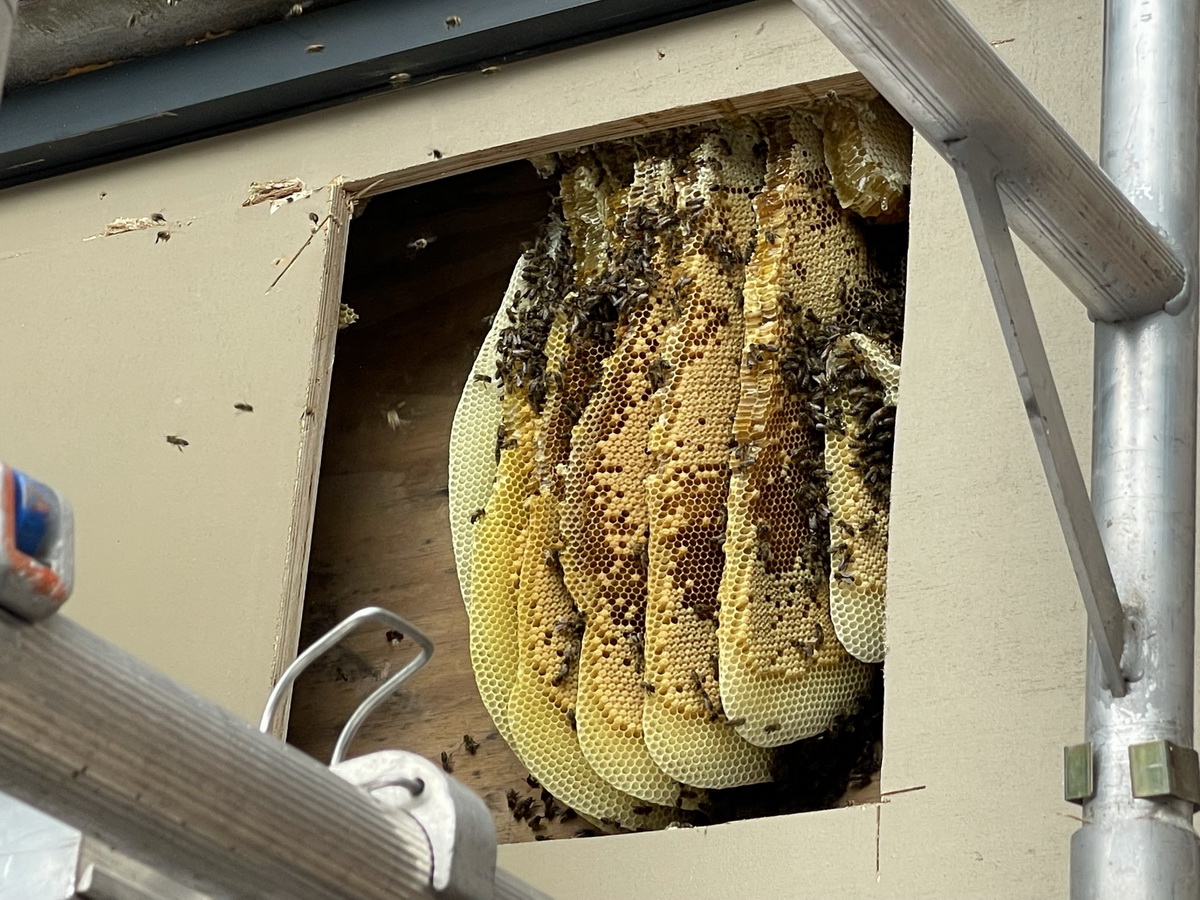
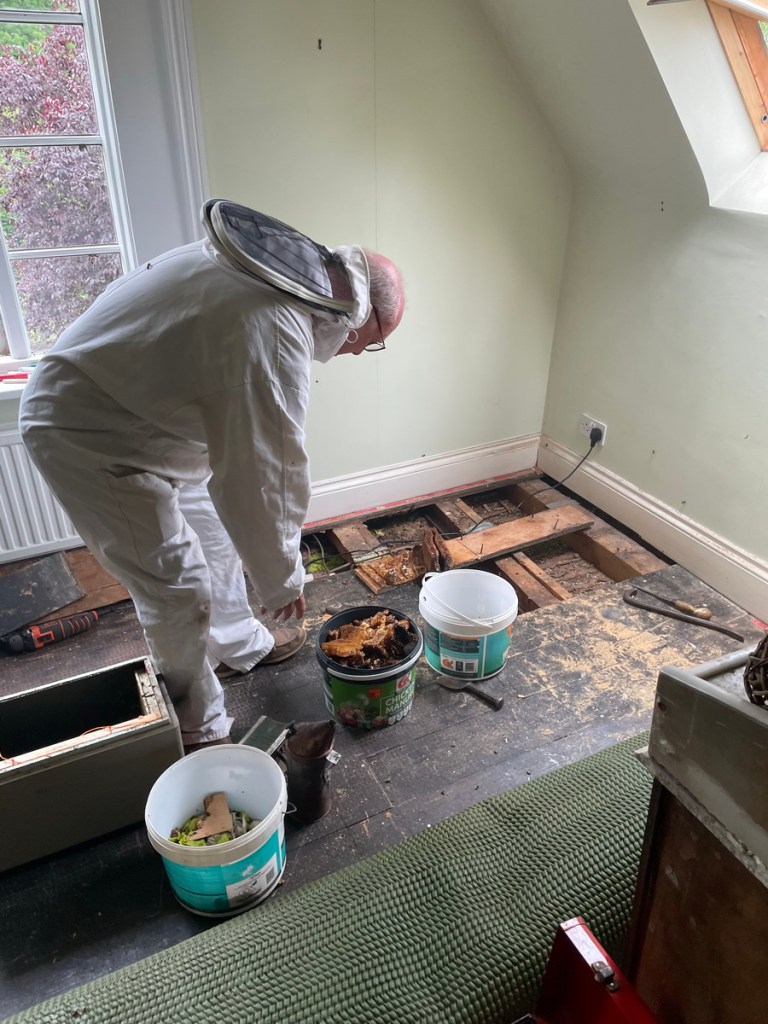
If you are called on to help with collection of a swarm please consider:

  1. Do I have the training and capability to do this?
    Normally those with a basic assessment or higher qualification who have kept bees for more than 5 years are automatically qualified.
  2. Do I have the equipment needed for this situation?
    Steps, Ladders, Bee suit etc, Bee equipment (skep/nuc/hive/box/sheeting/rope or tape etc.), secateurs, loppers, means to securely transport the bees.
  3. Do I need assistance to undertake this safely?
    Will I need an assistant, can the homeowner/occupier help safely?
  4. Are the conditions appropriate (weather/ground/surrounding risks/access restrictions/people present?)
  5. What is the ultimate destination for the bees?
    Where will their new home be? Can I transport them safely?
  6. What are the benefits of this action?
    Just the bee colony gained, or can the association receive a donation in recognition of a service performed? [The owner/occupier may be relieved to see the back of the bees and the time/energy/materials involved in their removal may be significant.]
  7. Am I insured?
    The current Insurance Policy FAQs for NBKA/BBKA members state:
    [9.] I am called by a member of the public to collect bees that have swarmed – am I covered?
    What happens if I charge for my services?

    You are covered provided, it is part of your normal beekeeping activities. If you charge reasonable expenses to cover fuel costs then this will not affect your cover. However, if you make a business out of swarm collection this would be viewed differently. You would need normal Commercial Insurance for this business activity which is not covered by the BBKA policy.
    [10.] Is there any restriction on working at height?
    No. The Aviva policy does not have a specified restriction for working at height. Broadly speaking, you should not attempt any work for which you do not have adequate equipment, training or experience.  The policy does not cover reckless acts, so if you are in doubt seek guidance from someone with the relevant experience or training or, preferably, use an alternate method that would avoid you having to climb to height.

Beginners Beekeeping Course 2026

We will be running a course for those interested in beekeeping. This will be of interest to the spectrum of people from those with hives who have not had training, through those keen to start keeping their own bees, to those who are not sure if beekeeping would be for them.

The course will run on Monday evenings in Newent starting at the end of February. To read more or apply to join please see our training page here.

AGM 2025 was a success

Although only a small cross-section of the membership (30%) came to our AGM we had a good meeting with important motions passed.

We managed to finish the business side by 9pm, and move on to tea, coffee, and informal chat over a tasting of various honeys.

Please see the Agenda and the material relating to the motions passed (downloadable below) if you missed the event and wish to catch up.

As a matter of record, we minuted acceptance of the proposal to change the timing and amount of subscriptions, also to support an initiative to research insect-venom tolerance.

Motions adopted

The motion on subscriptions passed is available for inspection here:

Winter Feed Orders

The club can offer substantial discounts by coordinating a bulk order for winter feeds (Syrup / Fondant.) Please order before July 2nd to take advantage.

Tony (our Treasurer) has been able to negotiate what he thinks you will find are highly competitive quotes.
Fondant comes in 12.5kg blocks and can be used as one lump in the autumn or kept for late winter/spring use as required.  The Invertbee syrup comes in 14kg plastic drums, this doesn’t ferment and can be used over the winter if needed. 
The price of fondant this year is £16.55 per 12.5kg block and the Invertbee syrup is £21.62 per 14kg drum.  
Please follow the link below to our Stripe payment facility to place your order, adjusting the required quantity of both syrup and fondant before completing the card payment.  The closing date for orders will be Tuesday 2nd July, I shall advise on collection arrangements nearer the time.
Click here to order
Should you have any difficulty in placing your order online, please do contact Tony at tony.capener@gmail.com