Bees for Development Charity

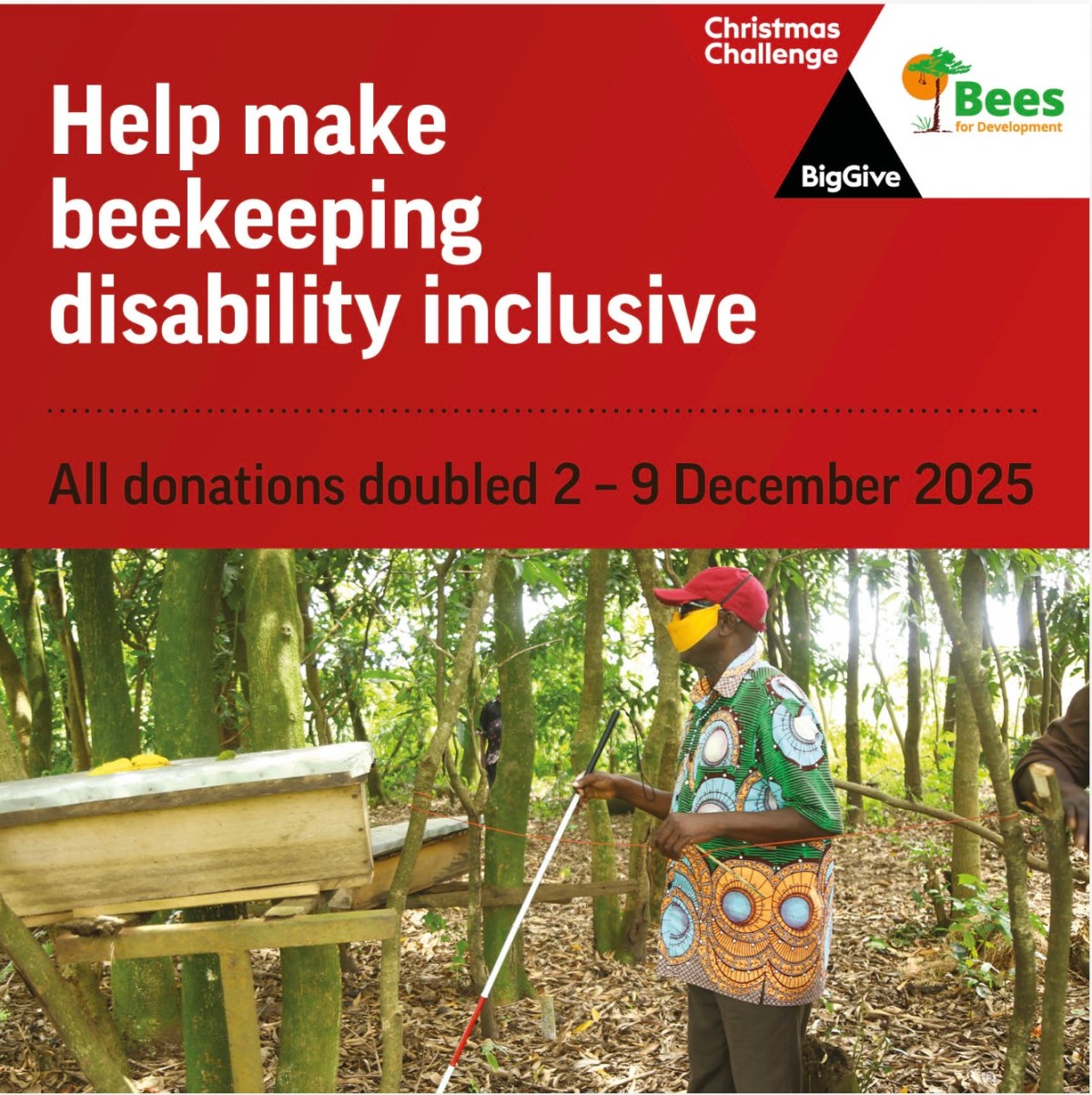
The Bees for Development Big Give Christmas campaign runs from Tuesday 2 December – Tuesday 9 December 2025. During this week only, your money is worth double the value of what you donate: £5 becomes £10, £50 becomes £100, £5,000 becomes £10,000! This week is your chance to make DOUBLE the difference by giving 300 people with disabilities in Uganda and Ghana the tools, skills, and confidence to transform their lives through beekeeping. Please help us to make life better with bees and donate at Help Make Beekeeping Disability Inclusive – Big Give

We are fundraising to provide beekeeping training to people living with disability in Uganda and Ghana, empowering them to make a living and earn respect. Make a donation between 2–9 December 2025 and all donations will be doubled!

12% of Ugandans and 8% of Ghanaians have a disability. Employment opportunities are few and difficult to access and people with disability often face huge social, cultural and physical barriers and suffer chronic poverty.

Beekeeping provides a way for people to earn an income. It also provides good nutrition and medicine, helps address social inclusion and encourages people to protect their environment.

🐝 Develop disability inclusive training for 300 beekeepers including men, women and youth from Uganda and Ghana
🌟 Train bee champions to provide beekeeping mentorship
🌍 Scale up and share our successful Ugandan disability inclusive beekeeping model with Ghana.

Please do save the date – you can be confident that your money will reach the people who need it most, read more details HERE 

Insta: @‌beesfordevelopment
Facebook: @‌beesfordevelopment
X: 
@‌BeesForDev
LinkedIn: @‌bees-for-development

Your Bees This Winter

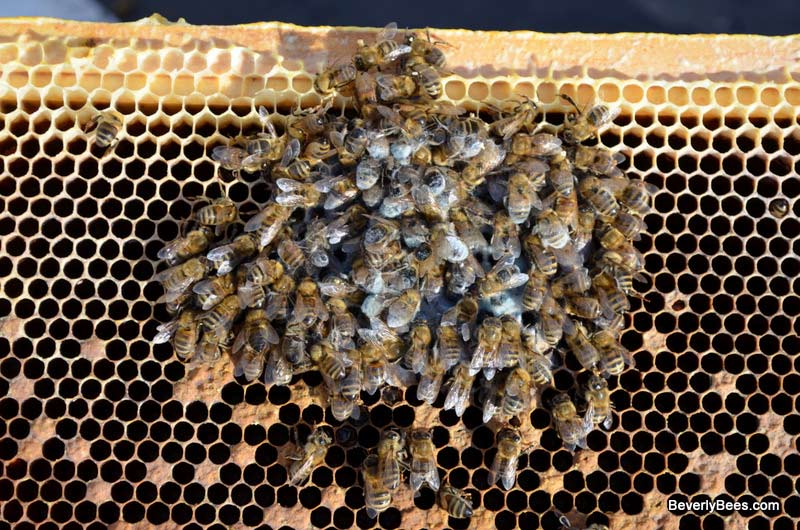
Several of our beekeepers are reporting the loss of colonies due to the recent spells of cold weather.

Have you lost a colony (colonies)?

In order to gauge the severity of the problem, and try to define the most probably causes of colony loss we would like to hear from you.

Please email newentbees@googlemail.com or burrowsadrianj@gmail.com indicating how many colonies you keep and how many have died. One of us will follow up with a request for further details. We will hope to identify a major cause and (possibly) methods to avoid losses in future years.

Kilcot Apiary – NBKA’s own Bees

Why help and support are needed.

Our hives are there for several purposes:
1) As a resource for training new beekeepers
2) A place for non-beekeeping members to gain experience
3) To provide honey for the landlord as part of our ‘rent’
4) To allow members to try out techniques that may not be appropriate at their own apiaries
5) To allow more experienced beekeepers to practice queen rearing
6) To provide a pleasant location to meet and discuss bee experiences

The Apiary has its own equipment and space for activities and about a dozen hives currently.

We depend on regular attendance during the busy season to conduct the club activities and share the load on inspections, training, queen rearing, swarm prevention measures etc. It is also useful to appreciate the benefit of good record keeping when attendees change from week to week.

In addition there is the regular maintenance of the grounds, hives, equipment, and facilities for which rotas are usually organised to share the load.

Can all club members consider ‘doing their bit’ by attending the practical sessions as regularly as possible, and volunteering for the supporting tasks wherever they can. We really do depend on each other to make the club a success and to continue our role in support of pollinators, beekeepers, and would-be beekeepers (our future membership!). The executive committee will really appreciate any support in this.

NBU Regional Bee Inspector Reports

This page at the National Bee Unit website contains reports, reviews and letters from NBU inspectors.  Newent BKA is in the Western Region.

Click here to open the NBU page

NBKA is in the Western Region, and Jonathan Axe is our Regional Inspector (07867 151641). Liz Gardner is the Seasonal Bee Inspector for Gloucestershire (07867 351610). The report for 2022 carries maps of the identified outbreaks of EFB and AFB, and interesting statistics on the number of apiaries and colonies.

Asian Hornet Trap Video

This video shows you how to make a monitoring trap for Asian hornets and is designed to complement the NBU’s step-by-step fact sheet: http://www.nationalbeeunit.com/downlo…

Find out how to identify Asian hornets using this helpful guide: https://secure.fera.defra.gov.uk/nonn…

If you think you have seen an Asian hornet, please notify the Great British Non-Native Species Secretariat by emailing alertnonnative@ceh.ac.uk as soon as possible. Alternatively, you can report sightings via their website: http://www.nonnativespecies.org/home/…

Beekeepers can find more information about the Asian hornet on the National Bee Unit’s website: http://www.nationalbeeunit.com/index….