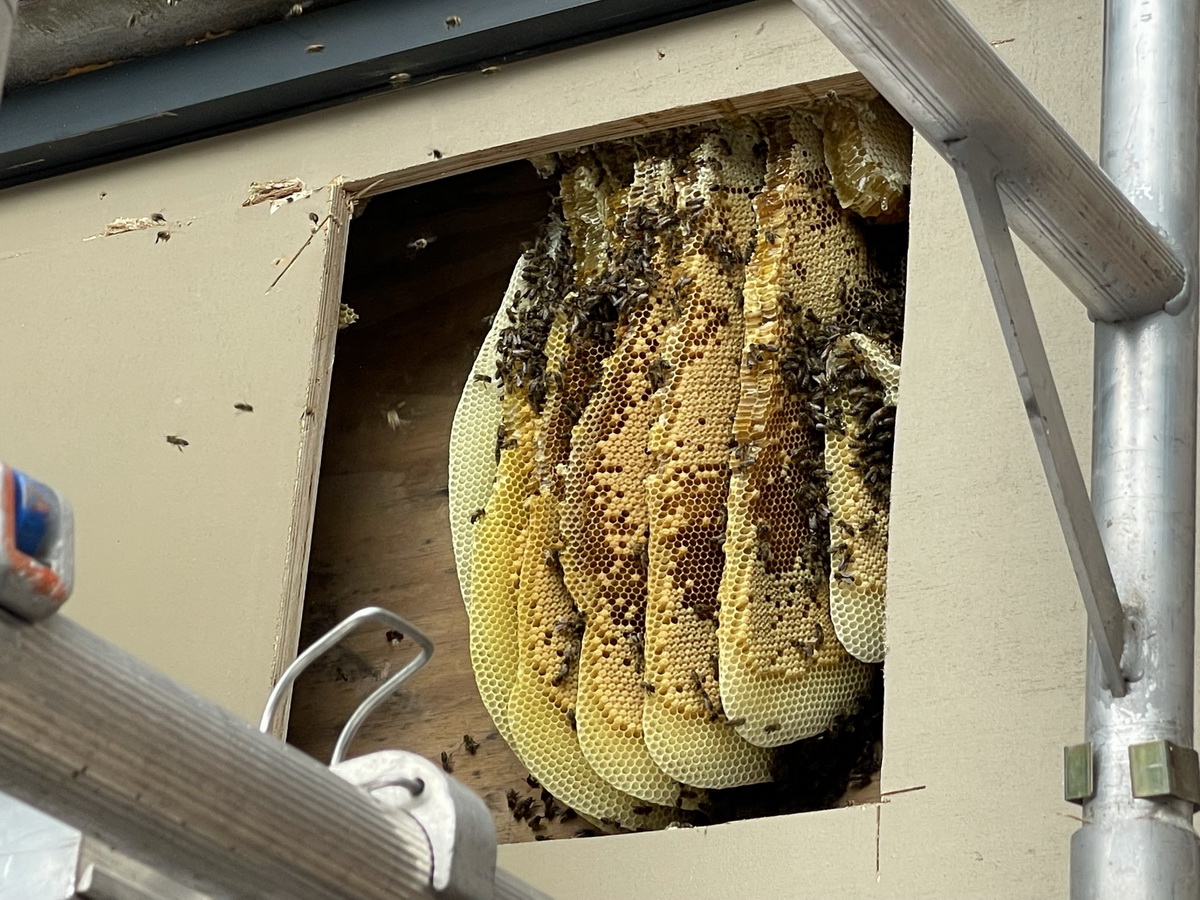
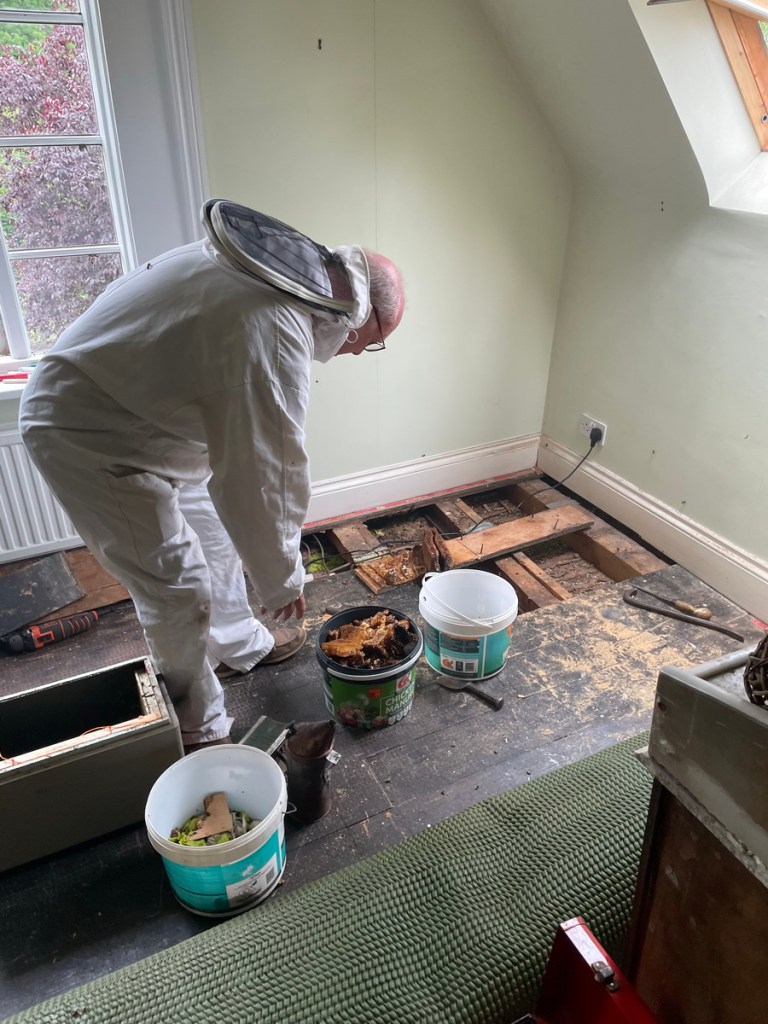
Members: Swarm Collection Guidelines

If you are called on to help with collection of a swarm please consider:

  1. Do I have the training and capability to do this?
    Normally those with a basic assessment or higher qualification who have kept bees for more than 5 years are automatically qualified.
  2. Do I have the equipment needed for this situation?
    Steps, Ladders, Bee suit etc, Bee equipment (skep/nuc/hive/box/sheeting/rope or tape etc.), secateurs, loppers, means to securely transport the bees.
  3. Do I need assistance to undertake this safely?
    Will I need an assistant, can the homeowner/occupier help safely?
  4. Are the conditions appropriate (weather/ground/surrounding risks/access restrictions/people present?)
  5. What is the ultimate destination for the bees?
    Where will their new home be? Can I transport them safely?
  6. What are the benefits of this action?
    Just the bee colony gained, or can the association receive a donation in recognition of a service performed? [The owner/occupier may be relieved to see the back of the bees and the time/energy/materials involved in their removal may be significant.]
  7. Am I insured?
    The current Insurance Policy FAQs for NBKA/BBKA members state:
    [9.] I am called by a member of the public to collect bees that have swarmed – am I covered?
    What happens if I charge for my services?

    You are covered provided, it is part of your normal beekeeping activities. If you charge reasonable expenses to cover fuel costs then this will not affect your cover. However, if you make a business out of swarm collection this would be viewed differently. You would need normal Commercial Insurance for this business activity which is not covered by the BBKA policy.
    [10.] Is there any restriction on working at height?
    No. The Aviva policy does not have a specified restriction for working at height. Broadly speaking, you should not attempt any work for which you do not have adequate equipment, training or experience.  The policy does not cover reckless acts, so if you are in doubt seek guidance from someone with the relevant experience or training or, preferably, use an alternate method that would avoid you having to climb to height.
Beginners Beekeeping Course 2026

We will be running a course for those interested in beekeeping. This will be of interest to the spectrum of people from those with hives who have not had training, through those keen to start keeping their own bees, to those who are not sure if beekeeping would be for them.

The course will run on Monday evenings in Newent starting at the end of February. To read more or apply to join please see our training page here.

Your Bees This Winter

Several of our beekeepers are reporting the loss of colonies due to the recent spells of cold weather.

Have you lost a colony (colonies)?

In order to gauge the severity of the problem, and try to define the most probably causes of colony loss we would like to hear from you.

Please email newentbees@googlemail.com or burrowsadrianj@gmail.com indicating how many colonies you keep and how many have died. One of us will follow up with a request for further details. We will hope to identify a major cause and (possibly) methods to avoid losses in future years.

The end of American Foul Brood (AFB)? In USA anyway!

A recent BBC News Item:
By Madeline Halpert (BBC News, New York)
The US has approved use of the world’s first vaccine for honeybees.
It was engineered to prevent fatalities from American foulbrood disease, a bacterial condition known to weaken colonies by attacking bee larvae.
The US Department of Agriculture (USDA) approved a conditional license for the vaccine this week, according to the biotech firm behind its development.
As pollinators, bees play a critical role in many aspects of the ecosystem.
The vaccine could serve as a “breakthrough in protecting honeybees”, Dalan Animal Health CEO Annette Kleiser said in a statement.
It works by introducing an inactive version of the bacteria into the royal jelly fed to the queen, whose larvae then gain immunity.
The US has seen annual reductions in honeybee colonies since 2006, according to the USDA.
The USDA says many, sometimes overlapping, factors threaten honeybee health, including parasites, pests and disease, as well as a phenomenon called Colony Collapse Disorder, which occurs when worker bees abandon a hive and leave behind the queen.
Pollinators such as bees, birds and bats are responsible for about a third of the world’s crop production, according to the United Nation’s Food and Agricultural Organization.
American foulbrood disease poses a challenge for beekeepers as it is highly contagious and has no cure. The only treatment method requires burning the colony of infected bees along with the hives and equipment and treating nearby colonies with antibiotics.
The new vaccine contains an inactive version of the bacteria that causes American foulbrood disease, Paenibacillus larvae, according to Dalan Animal health.
The bacteria are incorporated into royal jelly feed given by worker bees to the queen bee, which then ingests the feed and keeps some of the vaccine in her ovaries, according to the biotech firm, which specialises in insect health and immunology.
It says this gives bee larvae immunity to the disease as they hatch and reduces death from the illness.
The new vaccine could mark an “exciting step forward for beekeepers”, California State Beekeepers Association board member Trevor Tauzer said in a statement.
“If we can prevent an infection in our hives, we can avoid costly treatments and focus our energy on other important elements of keeping our bees healthy,” he said.
Dalan plans to distribute the vaccine “on a limited basis” to commercial beekeepers and said the product would probably be available for purchase in the US this year.

BeeConnected: Connecting beekeepers and farmers

BeeConnected is a new way of undertaking a long-standing practice: farmers informing beekeepers of an intention to apply an insecticide.
To join please create a logon at the BeeConnected website.
Farmers can register on the system and then identify a field they are planning to spray with an insecticide by dropping a pin in the on-screen map. Then, using the drop down menus, they simply enter the insecticide they will be using, the crop they are spraying, and the date they are spraying, and a basic notification will be sent out to neighbouring beekeepers registered on the system.
Beekeepers can register on the system and simply map the location of their bee hives by dropping a pin in the on-screen map. They will then receive a notification by email when a spray event is due to take place within the vicinity of a hive.